TL;DR: AI inference is a cost that keeps growing with usage: CloudZero put average monthly AI spend at $85,000 in 2025, up 36% year over year. The main levers are performance tuning (quantization, pruning, right-sizing) and cutting hidden costs such as idle compute, data egress, and managed-service premiums. Companies that did this report inference cost reductions of 40% to over 60%.
1. Executive Summary
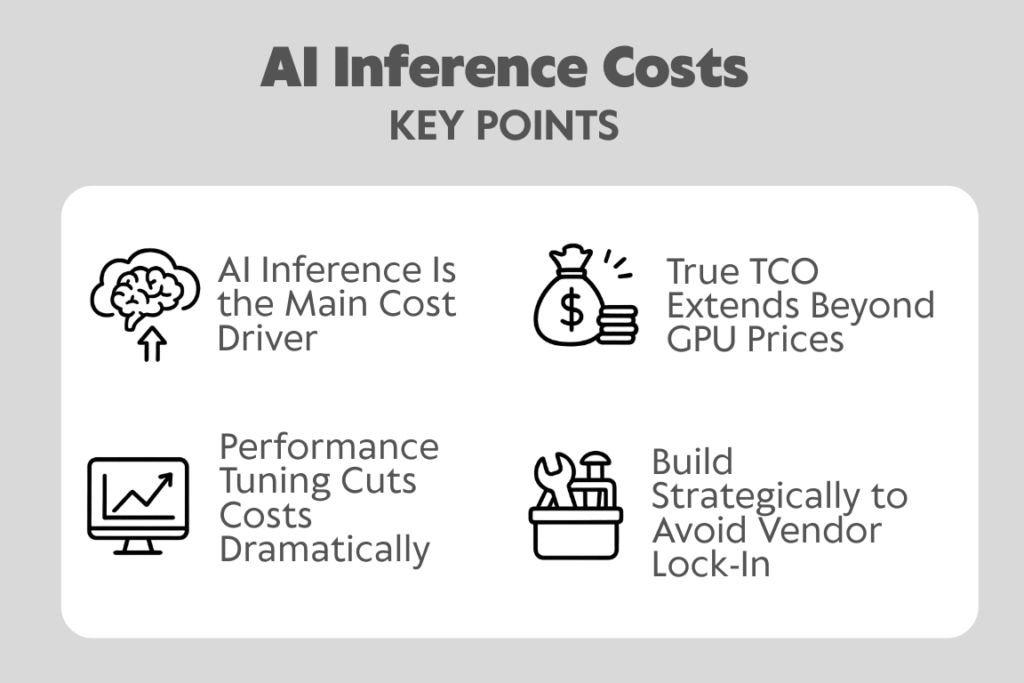
Artificial Intelligence (AI) inference is a significant and often overlooked driver of escalating cloud costs. According to a 2025 CloudZero report, the average monthly spend on AI has already reached $85,000. While model training represents a significant upfront and intermittent cost, inference is a continuous operational expense that grows directly with user engagement. Technology leaders must adopt performance tuning as a core strategy to control these expenses. This guide provides the actionable insights necessary to optimize infrastructure, reduce Total Cost of Ownership (TCO), and build a sustainable AI practice.
2. The Rising Tide of AI Inference Costs
Artificial Intelligence (AI) Inference—the process of using a trained model to make predictions on new, real-world data—is the engine of modern AI applications. It is also the primary driver of their operational cost. While model training is often viewed as the primary cost center, inference represents the continuous and growing expense that scales with an application’s success, creating what the NEAR Protocol blog calls a “cloud compute tax.”
This trend is reflected in enterprise budgets. The CloudZero 2025 report found that average AI spending increased by 36% year-over-year. As inference workloads become a dominant component of cloud consumption, managing these growing costs requires a strategic focus on performance optimization. To get a handle on these expenses, leaders must first understand that the most visible costs are only the beginning.
3. Uncovering the Hidden Costs in Your Cloud Bill
The price listed on your cloud provider’s GPU instances is only the beginning. The Total Cost of Ownership (TCO) for AI inference includes numerous indirect expenses that can substantially inflate your final bill.
3.1. Infrastructure and Resource Waste
Beyond direct GPU time, several infrastructure-related costs contribute to the TCO. According to CloudOptimo, idle compute waste from over-provisioned resources and storage costs for holding large models and datasets are common culprits. Furthermore, Aethir‘s analysis points to expensive data egress fees—the cost to move data out of a cloud environment—and the performance penalty associated with virtualization overhead in standard cloud setups.
3.2. Managed Services and Licensing
Leveraging third-party services can accelerate development but adds layers of expense. CloudOptimo highlights the premium cost of managed AI services, which abstract away infrastructure management for a fee. Additionally, the FinOps Foundation notes that using proprietary models or specialized MLOps tools can introduce significant software licensing fees.
3.3. Scaling and Operational Inefficiencies
As workloads grow, inefficiencies can cause costs to spiral. A10 Networks warns of the challenge of unpredictable cost scaling in the cloud, where expenses can grow faster than revenue. The operational burden of model versioning and frequent retraining to maintain accuracy also adds recurring costs, as identified by CloudOptimo.
4. Strategic Performance Tuning: Your Path to Efficiency
Performance tuning is a set of technical strategies designed to maximize the efficiency of your hardware, processing more predictions with fewer resources and ultimately reducing the cost per inference.
4.1. Model Compression and Optimization
Model compression involves shrinking a model’s size to reduce its computational demand, memory footprint, and storage costs. As detailed in the FinOps Foundation‘s guide, two common techniques are:
- Quantization: Reducing the numerical precision of the model’s weights. Think of this as similar to saving a high-resolution photograph as a more compressed JPEG file—the quality is nearly identical to the human eye, but the file size is drastically smaller.
- Pruning: Removing redundant or unimportant connections (weights) within the neural network. This is like removing redundant lines of code that don’t affect the final output.
4.2. Efficient Request Handling
Intelligently processing incoming requests can dramatically improve throughput and hardware utilization. The primary technique is batching, which groups multiple user requests together to be processed simultaneously by the model. Doubleword AI also cites continuous batching as an advanced technique that further optimizes GPU usage by dynamically creating batches without waiting for a full queue.
4.3. Infrastructure Right-Sizing
Matching the right infrastructure to the specific workload is crucial for cost control. As demonstrated by Observe.AI, who cut costs by over 50% through systematic load testing (detailed in Section 7), matching infrastructure to the workload is critical. For smaller workloads that don’t require a full high-end GPU, using fractional GPUs—a technique successfully implemented by Vannevar Labs—allows multiple models to share a single physical GPU, eliminating waste.
5. Choosing Your Path: In-House vs. Managed Solutions
A key strategic decision is whether to build an in-house inference platform using open-source tools or to rely on proprietary third-party APIs from managed service providers.
5.1. The Case for Building In-House
A Do-It-Yourself (DIY) approach offers maximum control and significant long-term cost savings. The Atlassian Engineering blog reported a cost reduction of over 60% for its Large Language Model (LLM) workloads and over 80% for non-LLM models after migrating from third-party hosts to a custom Kubernetes-based system. A primary motivation for Atlassian was avoiding vendor lock-in, which provides greater flexibility and prevents dependency on a single provider’s roadmap and pricing.
5.2. The Trade-Offs of Managed Services
Managed services can offer a faster time-to-market by abstracting away complex infrastructure management. However, this convenience comes with trade-offs. The FinOps Foundation notes that this path often leads to higher long-term costs and introduces the risk of vendor dependency, making it difficult and expensive to switch providers or technologies in the future.
| Feature | In-House / Open Source | Managed / Proprietary |
| Long-Term Cost | Lower | Higher |
| Vendor Lock-In Risk | Low | High |
| Initial Setup Effort | High | Low |
| Control & Customization | High | Limited |
6. Navigating the Risks: Vendor Lock-In and Diminishing Returns
While optimization is powerful, it’s essential to understand the strategic risks and recognize when the effort may not be justified.
6.1. The Hidden Danger of Vendor Lock-In
Cloudflare defines vendor lock-in as a situation where a customer becomes dependent on a single vendor and cannot easily switch to another without substantial cost, effort, or technical rework. Both A10 Networks and Atlassian highlight that avoiding this dependency is a key strategic benefit of building on open-source technologies or adopting a hybrid-cloud approach. This is precisely the risk that motivated companies like Atlassian to invest in a custom platform, trading initial effort for long-term freedom and cost control.
6.2. When Is Performance Tuning Not Worth the Effort?
Advanced performance tuning is not always the right answer. For certain use cases, the engineering effort required to implement custom solutions may outweigh the potential savings. This is often true for early-stage product MVPs, internal-only administrative tools, or one-off data analysis projects where AI costs are not a primary driver of the product’s unit economics. As noted by DeepLearning.AI and Helicone.ai, the complexity and resources required for optimization must be justified by the expected return on investment.
7. Real-World Success: Quantified Cost Reductions
Several organizations have successfully implemented these strategies to achieve significant, measurable cost savings.
- Vannevar Labs
- Challenge: Vannevar Labs’ inference costs were becoming a significant and unpredictable drain on their budget, hindering their ability to scale services profitably.
- Solution: They built a new inference platform using Ray Serve on Kubernetes with Karpenter for intelligent autoscaling and implemented fractional GPUs to share resources efficiently.
- Quantified Outcome: A 45% reduction in ML inference costs along with significant improvements in model latency.
- Observe.AI
- Challenge: Observe.AI faced a classic growth dilemma: their data volumes were exploding 10x, threatening to make their ML costs unsustainable.
- Solution: They developed a custom load testing framework on AWS SageMaker to systematically benchmark models on different instance types to find the most cost-effective option for each workload.
- Quantified Outcome: A cost reduction of over 50% while successfully scaling their platform.
- Simplismart.ai
- Challenge: Scaling their generative AI workloads cost-effectively on AWS while maintaining performance.
- Solution: They implemented a sophisticated autoscaling strategy using warm pools to ensure that compute instances were readily available to handle traffic spikes without delay.
- Quantified Outcome: A 40% reduction in infrastructure costs.
8. Conclusion: A Framework for Action
The escalating cost of AI inference is a strategic threat, but it is manageable with decisive action. Significant savings are achievable through a strategic focus on performance tuning. Proactively managing hidden costs like data egress, idle resources, and service premiums is essential for building a sustainable AI infrastructure. For any leader serious about AI ROI, the following checklist is an essential framework.
- Your Cost Optimization Checklist:
- Audit Your TCO: Analyze your cloud bill to identify hidden costs beyond direct compute.
- Benchmark Your Models: Measure the current price-performance of your key inference workloads.
- Evaluate Low-Hanging Fruit: Implement straightforward optimizations like instance right-sizing and batching.
- Assess Strategic Platforms: Compare the long-term costs and risks of managed services versus a custom, open-source-based platform.
- Start Small and Scale: Pilot advanced techniques like model compression on a single workload to prove ROI before wider implementation.
FAQ
Training is an intermittent cost, but inference runs continuously and grows with every user. CloudZero’s 2025 report found average monthly AI spend of $85,000, up 36% year over year.
Idle compute from over-provisioned resources, storage for large models and datasets, data egress fees, virtualization overhead, and premiums for managed services and licensing.
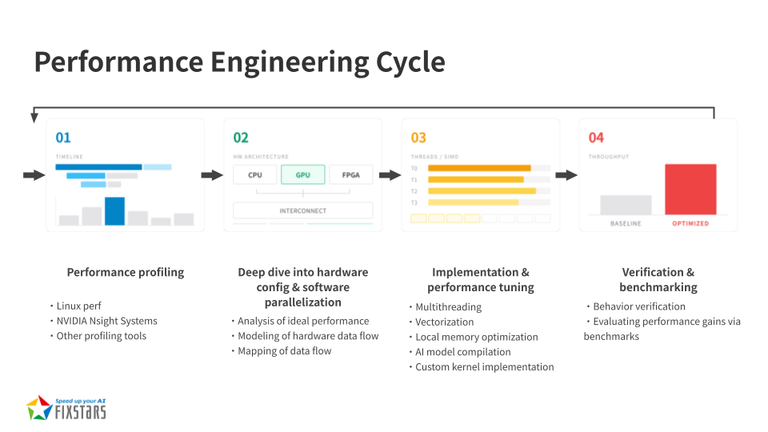
Compress models with quantization and pruning, right-size infrastructure through load testing, and use autoscaling and fractional GPUs. Vannevar Labs cut ML inference costs by 45% this way, and Atlassian reported over 60% savings on LLM workloads after moving to a custom Kubernetes platform. For the engineering side, see How to Unlock AI Performance.
9. References
- A10 Networks (Akhilesh Dhawan). (2025, Jan 30). Building AI and LLM Inference in Your Environment? Be Aware of These Five Challenges. https://www.a10networks.com/blog/building-ai-and-llm-inference-in-your-environment-be-aware-of-these-five-challenges/
- Aethir (Blog). (2025, Jul 29). The Hidden Cost Crisis in AI Infrastructure: Why Bare-Metal GPU Pricing and Quality Define Success in AI. https://aethir.com/blog-posts/the-hidden-cost-crisis-in-ai-infrastructure-why-bare-metal-gpu-pricing-and-quality-define-success-in-ai
- Atlassian Engineering (Jordan Leventis et al.). (2025, Jul 22). Atlassian’s Inference Engine – our self-hosted AI inference service. https://www.atlassian.com/blog/atlassian-engineering/inference-engine
- AWS Case Study – Observe.AI. (2024). Observe.AI Cuts Costs by Over 50% with Machine Learning on AWS. https://aws.amazon.com/solutions/case-studies/observe-ai-case-study/
- AWS Case Study – Simplismart.ai. (2025). Simplismart.ai Scales Generative AI Workloads with Faster Inference and 40% Lower Infrastructure Costs. https://aws.amazon.com/solutions/case-studies/simplismart-ai-case-study/
- Cloudflare. What is Vendor Lock-in?. https://www.cloudflare.com/learning/cloud/what-is-vendor-lock-in/
- CloudOptimo (Visak Krishnakumar). (2025, Sep 18). The Hidden Cost of AI in the Cloud. https://www.cloudoptimo.com/blog/the-hidden-cost-of-ai-in-the-cloud/
- CloudZero. (2025, March). The State of AI Costs in 2025 Report. https://www.cloudzero.com/state-of-ai-costs/
- DeepLearning.AI. When to Fine-Tune and When Not To. https://www.deeplearning.ai/short-courses/chatgpt-prompt-engineering-for-developers/
- Doubleword AI. Continuous Batching. https://docs.doubleword.ai/ FinOps Foundation. (2024, May). Cost Estimation of AI Workloads. https://www.finops.org/wg/cost-estimation-of-ai-workloads/
- Helicone.ai. When to Fine-Tune. https://www.helicone.ai/blog/when-to-finetune
- NEARWEEK (Medium). (2025, May 2). Building Blocks: Inference – The Hidden Cost of AI (Why Inference Is the Next Frontier). https://medium.com/nearprotocol/building-blocks-inference-98ace46feb63
- Vannevar Labs (Colin Putney et al.). (2024, Nov 20). How Vannevar Labs cut ML inference costs by 45%. https://vannevarlabs.com/blog/2024/11/20/aws-ray-eks/
Free white paper
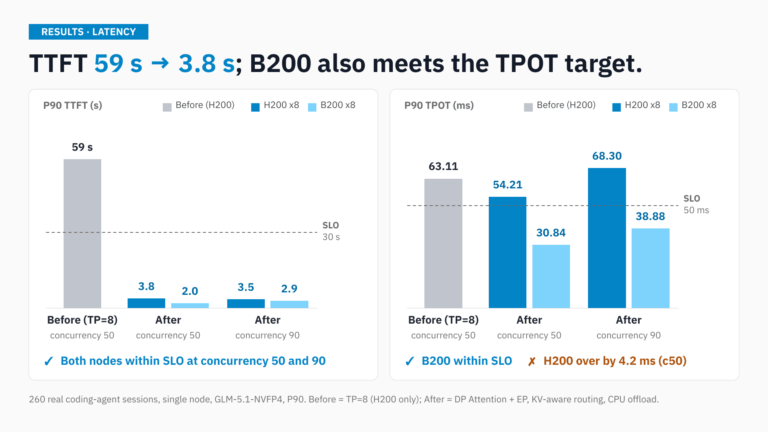
Bringing GLM-5.1 to Practical Speeds on a Single NVIDIA H200 Node
How we served a 754B MoE model on one 8-GPU node and cut P90 time to first token from 59 seconds to 3.8 seconds.
Download the white paper Or talk to our engineersAuthor

Miho Yoneda
Marketing Lead at Fixstars Solutions